Cartridge Membrane Guide — Why It Matters for Ink Flow
The membrane is the most important component in a tattoo cartridge that most artists never think about — until it fails. Every performance difference between a professional-grade cartridge and a budget one, every inconsistency that develops mid-session, every ink flow problem that can't be explained by voltage or technique — traces back to the membrane more often than any other component.
This guide explains what the membrane does, how different membrane types perform, what membrane failure looks like, and how to evaluate membrane quality when choosing cartridges.
What the Membrane Is
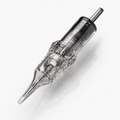
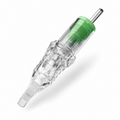
The safety membrane is a thin, flexible silicone barrier positioned inside the cartridge body, behind the needle grouping. It sits between the needle chamber at the front of the cartridge and the open section that connects to the machine grip at the back.
It's not visible from the outside of the cartridge in most designs — you won't see it unless the cartridge body is transparent or you disassemble the unit. But it's present in every professional cartridge, and its quality determines more about session performance than any other single component.
The Three Functions of the Membrane
1. Backflow Prevention
The primary hygiene function. On every needle upstroke, the needle retracts back into the cartridge body. Without a membrane, that retraction would create a vacuum that pulls ink and blood from the needle tips back through the cartridge and into the grip section — contaminating the machine's internal mechanism and creating cross-contamination risk between clients.
The membrane physically blocks that reverse flow. It allows the needle bar to pass through it on each stroke but seals around the bar tightly enough to prevent liquid from passing in the reverse direction.
A membrane that fails at backflow prevention is a hygiene failure — not just a performance issue. Visible ink in the grip section after a session is the most obvious sign of membrane failure.
2. Pressure Equalisation
The mechanical performance function. On every needle downstroke, the needle bar moving downward through the cartridge body displaces air volume inside the chamber. If that pressure increase isn't equalised, it creates resistance against the needle's movement and disrupts ink flow to the needle tips.
The membrane flexes outward slightly on each downstroke to equalise that pressure increase. On each upstroke, it returns to its resting position, which creates a slight vacuum that maintains capillary loading at the needle tips — keeping them primed for the next stroke.
This flex-and-return cycle happens on every stroke — at typical working speeds, that's 80 to 150 cycles per second. The membrane's ability to perform this cycle consistently, without fatiguing or losing elasticity, is what determines session-long ink flow consistency.
3. Ink Flow Regulation
A consequence of pressure equalisation. Because the membrane controls the pressure environment inside the cartridge chamber on each stroke, it directly affects how consistently ink reaches the needle tips. A membrane with well-calibrated tension produces even, predictable pressure equalisation — which produces even, predictable ink flow. A membrane with variable tension produces variable pressure equalisation — which produces variable ink flow.
This is why membrane quality is the most direct determinant of ink flow consistency. It's not the needle grouping, not the tip geometry, not the ink itself — it's the membrane's pressure regulation that makes ink flow consistent or inconsistent stroke to stroke.
Membrane Types and Performance
Standard Silicone
The baseline membrane type used across most cartridge ranges. Standard silicone provides functional backflow prevention and basic pressure equalisation. It performs adequately under normal session conditions — shorter bookings, standard working speeds, average ink viscosity.
The limitation of standard silicone is performance under extended use. Silicone compounds flex repeatedly under session load — at 100 strokes per second, that's 360,000 flex cycles per hour. Standard silicone membranes lose elasticity progressively under this load, which means the pressure equalisation becomes less consistent as the session progresses. Artists who use standard silicone membranes in long sessions often notice a change in needle feel and ink flow in the later hours — that's membrane fatigue.
Standard silicone is the norm in mid-range cartridges. It's functional and meets professional hygiene standards. For shorter sessions and general studio use, it performs reliably.
High-Quality Silicone
An engineered silicone compound with better elasticity retention under sustained cycling. High-quality silicone membranes maintain their tension and flex characteristics more consistently across extended sessions than standard silicone — the pressure equalisation at hour four feels the same as hour one.
This is the membrane standard used in the BigWasp Energy line. The compound is formulated specifically for the load of extended professional use — consistent tension, reliable backflow prevention, and stable ink flow regulation across the full session duration.
For studios running back-to-back long bookings, the difference between standard and high-quality silicone becomes visible in the work. Consistent ink flow late in a session produces better results than variable flow from a fatigued membrane.
High-Elastic Silicone
A more flexible silicone compound that responds more precisely to subtle pressure changes than standard or high-quality silicone. The higher elasticity means the membrane tracks voltage and pressure adjustments more accurately — when you change your working voltage or lighten your pressure, the membrane responds immediately rather than lagging.
This characteristic is specifically relevant for techniques that require fine tonal control — realism, portrait shading, grey wash, extended gradient work. At the lower end of the voltage range, where membrane sensitivity matters most for tonal precision, a high-elastic membrane gives you more control over how much ink deposits per stroke.
The BigWasp Transparent and Purple lines use high-elastic membrane systems. For artists whose work operates at the precision end of professional tattooing — particularly realism and portrait specialists — the high-elastic membrane's sensitivity advantage is a genuine performance difference, not just a spec upgrade.
Patented Membrane Systems
Some brands hold patents on specific membrane designs. Cheyenne's patented Safety Membrane (Patent US 8,029,527) is the most well-known — it was a significant engineering advancement when introduced and set a standard that other brands subsequently had to meet or work around.
A patented membrane doesn't automatically mean better performance than a non-patented high-quality silicone membrane. What it does indicate is a specific engineering investment in membrane design. Cheyenne's membrane is reliable and well-documented — its performance is proven across years of professional use.
The relevant question when evaluating any membrane — patented or not — is whether the compound and design maintain consistent performance across the full session duration at your working conditions. A patented membrane that fatigues mid-session is less useful than a non-patented high-quality silicone that holds its tension.
How Membrane Quality Affects Ink Flow — In Practice
The practical consequences of membrane quality show up in specific, observable ways during session use.
Consistent ink flow: A well-performing membrane produces ink flow that feels the same on stroke 500 as it did on stroke 10. Saturation builds predictably, line weight stays consistent, and you can focus on technique rather than compensating for equipment variation.
Variable ink flow: A fatiguing or low-quality membrane produces ink flow that changes character across the session. You might notice the needle feeling slightly different, ink seeming to deliver less consistently, or needing to adjust voltage mid-session to maintain the same result. These are membrane signals.
Surging: A membrane that's too stiff or improperly tensioned can cause ink to surge — delivering more ink than expected on some strokes and less on others. This produces uneven saturation and inconsistent line weight.
Stalling: A membrane that's too soft or has lost significant tension can cause ink flow to stall — the pressure equalisation fails to maintain capillary loading at the needle tips between strokes. You'll notice this as dry strokes where the needle moves but minimal ink deposits.
Membrane Failure — Signs and Causes
Signs of Membrane Failure
Ink in the grip section: The most definitive sign. If ink is visible inside the grip after removing the cartridge, the backflow barrier has been compromised. Replace the cartridge immediately and assess whether this is a one-off or a pattern with that brand.
Ink leaking from the back of the cartridge: Related to grip contamination — the backflow isn't just reaching the grip, it's exiting the cartridge entirely. A more severe failure.
Progressive change in needle feel: If the needle return feels different — softer, less consistent — mid-session without any change in machine settings, membrane fatigue is the most likely cause.
Inconsistent ink flow that worsens over time: Distinguishable from initial ink flow issues (which might be tip or grouping related) by the progressive character. If flow was consistent early in the session and degrades over time, the membrane is the primary suspect.
Causes of Membrane Failure
Low-quality silicone compound: Budget membranes use lower-grade silicone that fatigues faster under session load. The failure timeline is shorter and more predictable — a session that would be fine for a professional-grade membrane exceeds the budget membrane's working range.
Manufacturing defects: Even professional-grade cartridges occasionally have membrane defects from the production process. This is why batch consistency matters — a brand with tight manufacturing tolerances produces fewer defective units per box.
Improper cartridge handling: Dropping cartridges, storing them in conditions that degrade silicone (extreme heat or chemical exposure), or using cartridges past their indicated shelf life can compromise membrane integrity before use.
Exceeding working duration: Every membrane has a working lifespan. Professional-grade membranes are designed for single-session use — not for multi-session reuse. Using a cartridge across multiple client sessions is a hygiene violation and membrane failure risk.
Evaluating Membrane Quality When Choosing Cartridges
Most brands don't publish detailed membrane specifications — which makes evaluation challenging. Here's what to look for:
Published membrane type: Does the brand specify the membrane compound? "High-quality silicone," "high-elastic silicone," or "advanced safety membrane" are meaningful claims if they're backed by consistent performance. Unspecified membranes are a transparency gap.
Session-long performance reports: How does the cartridge perform in the third and fourth hour of a session, not just the first? This is the most relevant real-world test of membrane quality. Artist community feedback on extended session performance is a useful data point.
Backflow prevention consistency: Does ink reach the grip section? Occasional grip contamination with a brand suggests membrane quality or manufacturing consistency issues worth taking seriously.
Batch consistency: Does every cartridge in a box feel the same? Does box five from the same order perform the same as box one? Batch consistency reflects manufacturing quality — tight tolerances produce consistent membranes.
Membrane and Machine Compatibility
Membrane tension interacts with machine characteristics — specifically drive mechanism resistance and working voltage. A membrane that performs well with one machine setup may feel different on another.
High-resistance membranes require more drive force to flex on each stroke. On machines with lower drive power or set at lower voltages, a high-resistance membrane can create a stiff, resistant needle feel. Reducing the membrane's resistance (or increasing machine voltage) restores normal performance.
Low-resistance or high-elastic membranes flex more easily, which suits lower-voltage machine setups and techniques requiring high membrane sensitivity. On high-power machines at high voltage, a very low-resistance membrane can feel loose or imprecise.
Most professional cartridges are engineered for the standard professional machine operating range. If a cartridge feels wrong on your machine at your standard settings, try adjusting voltage before concluding the cartridge is the problem — the machine-membrane interaction is a two-variable equation.
Summary
The membrane is the performance-critical component in a tattoo cartridge. It prevents backflow (hygiene), equalises pressure (mechanics), and regulates ink flow (consistency) — on every single stroke of a session.
Standard silicone is functional for normal professional use. High-quality silicone maintains performance across extended sessions. High-elastic silicone adds sensitivity for precision tonal work. Patented systems offer documented, proven designs.
Membrane failure manifests as ink in the grip, progressive changes in needle feel, and worsening ink flow consistency over time. Evaluating membrane quality requires looking beyond initial feel to session-long performance, batch consistency, and brand transparency on material specifications.
The membrane is why two cartridges with identical needle configurations and gauges can feel completely different in use — and why it's the spec worth understanding most deeply when choosing professional cartridges.
Continue Learning
- Tattoo Needle Taper Length Explained — Short, Medium, and Long
- Cartridge Anatomy — Every Component Explained
Recommended for Artists