Ultimate Tattoo Cartridge Guide
Tattoo cartridges have replaced traditional needle bars in most professional studios for good reason. They're faster to set up, safer for the client, and more consistent across a session. But understanding how they work — and how to choose the right one — is what separates an artist who uses cartridges from one who uses them well.
This guide covers everything. Cartridge anatomy, needle configurations, membrane systems, gauge and taper, compatibility, and how to match cartridge to technique. If you're new to cartridges, start here. If you've been using them for years, there's likely something in here that sharpens your decision-making.
What Is a Tattoo Cartridge?
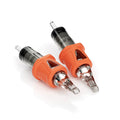
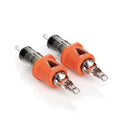
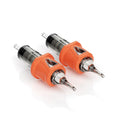
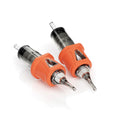
A tattoo cartridge is a single-use needle system designed for use with compatible rotary tattoo machines. It replaces the traditional setup of separate needle bar, tip, and grip — combining all three functional elements into one sealed, sterile unit.
Every cartridge contains:
- The needle — grouped and soldered to a needle bar inside the cartridge body
- The tip — the front section that guides the needle to the skin
- The safety membrane — a silicone barrier that prevents ink and blood from entering the grip
- The cartridge body — the housing that connects to the machine grip
The needle extends and retracts through the tip with each machine stroke. The membrane sits behind the needle grouping, flexing with each stroke to maintain controlled ink flow and prevent backflow into the machine.
Cartridge Anatomy — What Each Part Does
Understanding what's inside a cartridge helps you evaluate specs rather than just reading marketing copy.
The Needle Grouping
Needles inside a cartridge are grouped and soldered in specific formations — round, magnum, curved magnum. The grouping determines how ink enters the skin and what kind of mark the cartridge makes. Tight groupings produce precise marks. Wider groupings cover more area per pass.
The Tip
The tip geometry guides the needle and affects how closely you can see your working area. Transparent or clear tips allow full visibility of the needle position. Semi-transparent tips offer partial visibility. Opaque tips offer none. For fine detail work, tip visibility is a practical working advantage.
The Safety Membrane
The membrane is the most critical component for session-long performance. A high-quality membrane maintains consistent tension across hours of use, prevents backflow, and responds accurately to subtle pressure changes. Membrane quality is what separates professional-grade cartridges from functional ones.
The Cartridge Body
The housing material affects durability, chemical resistance, and visibility. Medical-grade polycarbonate (PC) offers the highest clarity and durability. Standard medical plastic is functional but less precise. The body also determines how securely the cartridge seats in the grip.
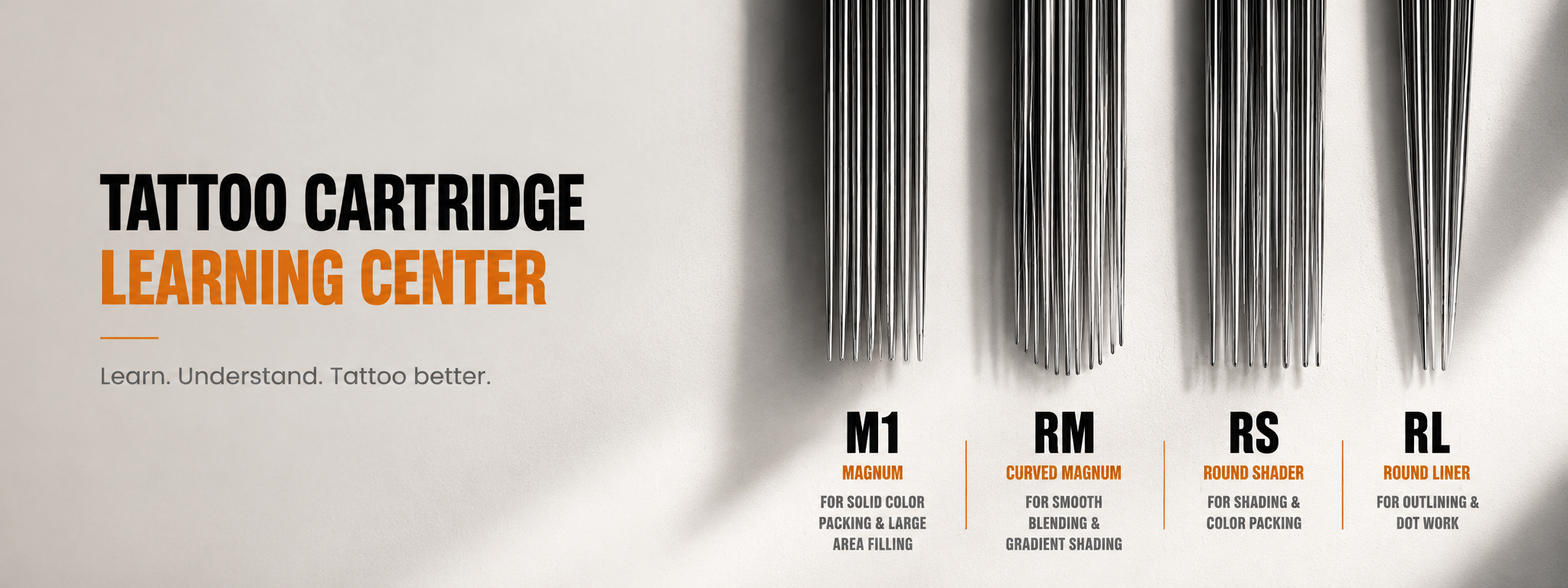
Needle Configurations — The Four You Need to Know
Every cartridge configuration is designed for a specific application. Understanding the difference is fundamental to matching your needle to your technique.
Round Liner (RL)
Needles grouped in a tight circle. Designed for outlines, fine line work, script, and detail. The tight grouping creates a precise point of ink deposit — clean entry, defined edge, consistent line weight. Available in sizes from 1RL (single needle) through 18RL for heavy outlines.
Best for: Outlines, fine line, script, geometric linework, dotwork
Round Shader (RS)
Needles grouped in a wider circle with more spacing between tips. Designed for soft shading, gradients, and tonal work. The wider grouping deposits ink across a slightly larger area per stroke, producing softer edges than a round liner.
Best for: Soft shading, tonal gradients, black and grey realism, portrait shading
Magnum (M)
Needles arranged in two rows — flat across the width of the configuration. Designed for color packing and large area coverage. More needles contact the skin per stroke, which means more ink per pass and faster, more even saturation across large color fields.
Best for: Color packing, solid fill, large area coverage, traditional color work
Curved Magnum (CM) — also called Round Magnum (RM)
The same two-row magnum arrangement but with a curved arc instead of a flat edge. The curve allows the needle grouping to sit flush against curved skin surfaces, distributing pressure evenly across the full width. Produces softer edges than a flat magnum and handles contoured anatomy more consistently.
Best for: Blending, color transitions, shading on curved surfaces, smooth gradients
Needle Gauge — What the Numbers Mean
Needle gauge refers to the diameter of each individual needle wire in the grouping. It's expressed as a # number or in millimetres.
| # Size | Diameter | Common Use |
|---|---|---|
| #04 | 0.18mm | Ultra-fine single needle, micro detail |
| #06 | 0.22mm | Super bugpin, hyper-fine detail |
| #08 | 0.25mm | Bugpin, fine detail work |
| #10 | 0.30mm | Fine line, precision shading |
| #12 | 0.35mm | Standard professional gauge — most applications |
| #14 | 0.40mm | Bold outlines, heavy color packing |
12 (0.35mm) is the industry standard for the majority of professional tattooing. It's the gauge most artists use for everyday linework, shading, and color work.
#10 (0.30mm) is the go-to for fine line specialists and artists who work in precision-demanding styles like realism and geometric dotwork.
Smaller gauges (#04–#08) are specialist tools — primarily used for single-needle fine line, hyper-detail dotwork, and portrait realism where the gauge itself is a technique variable.
Needle Taper — Short, Medium, and Long
Taper refers to how the needle tip is shaped — specifically how gradually it narrows to its point. Taper length affects how the needle enters the skin and how precisely ink is deposited.
Short taper — blunt, faster ink deposit, more trauma per stroke. Less common in professional cartridge use.
Medium taper — balanced entry. Standard for color packing, shading, and general professional use. The most versatile taper length.
Long taper — gradual, precise entry. Produces cleaner lines, less skin trauma, more controlled ink deposit. Preferred for fine line and realism work.
Super long taper — the most precise entry point. Used by fine line and portrait specialists. Cheyenne uses super long taper as a standard across their Craft line.
Matching taper to technique is as important as matching configuration. A long taper round liner for fine detail, a medium taper magnum for color packing — the combination of configuration and taper defines how a cartridge performs for a specific application.
The Safety Membrane — Why It Matters
The membrane is what makes cartridges safe to use with rotary machines. Without it, ink and blood would travel back through the cartridge into the grip section with each stroke — contaminating the machine and creating cross-contamination risk between clients.
A quality membrane does three things:
- Prevents backflow — keeps ink and blood moving in one direction only
- Regulates ink flow — maintains consistent ink delivery to the needle grouping
- Protects the machine — prevents contamination of the grip and drive mechanism
Membrane quality varies significantly between brands. A standard silicone membrane is functional. A high-quality silicone membrane maintains consistent tension through extended sessions. A high-elastic membrane responds more precisely to subtle pressure changes — relevant for realism and blending work where tonal control depends on membrane sensitivity.
Cartridge Compatibility
Most professional cartridges use a standardised connection system that fits the majority of rotary tattoo machines and cartridge grips. If your machine accepts cartridges, it almost certainly accepts standard-format cartridges.
Exceptions exist — some machines use proprietary systems. Cheyenne Hawk machines use a specific cartridge format. Always check your machine's compatibility before ordering a new cartridge brand.
BigWasp cartridges are compatible with most rotary machines and standard cartridge grips, including Cheyenne Hawk systems.
Sterilization and Hygiene Standards
Every professional cartridge should be:
- EO gas sterilized — ethylene oxide gas sterilization is the industry standard for single-use needle products
- Individually sealed — each cartridge in its own sterile packaging, not just box-level sterilization
- Single use only — cartridges are designed for one session with one client. Never reuse across clients
Higher-standard packaging uses high breathability dialysis paper — a sterilization material that allows full penetration of the sterilizing agent to the needle itself, rather than surface-only treatment. This ensures complete sterilization rather than partial.
How to Read a Cartridge Code
Cartridge codes look complex but follow a simple logic. Example: 1207RM
- 12 — needle gauge (#12 / 0.35mm)
- 07 — number of needles in the grouping
- RM — configuration (Round Magnum / Curved Magnum)
So 1207RM = a #12 gauge, 7-needle curved magnum cartridge.
Common configuration codes:
- RL — Round Liner
- RS — Round Shader
- M or M1 — Magnum
- RM or CM — Curved / Round Magnum
- RLT — Round Liner, Long Taper
Choosing the Right Cartridge — Quick Reference
| Technique | Configuration | Gauge | Taper |
|---|---|---|---|
| Fine line / script | Round Liner | #10–#12 | Long |
| Bold outlines | Round Liner | #12–#14 | Medium |
| Soft shading | Round Shader | #10–#12 | Medium |
| Black and grey realism | Round Shader + Round Liner | #10–#12 | Long |
| Color packing | Magnum | #12 | Medium |
| Blending / gradients | Curved Magnum | #12 | Medium |
| Dotwork / geometric | Round Liner | #10–#12 | Long |
| Portrait detail | Round Liner (small) | #08–#10 | Long |
What's Next
This guide covers the fundamentals. Each topic above has a dedicated page in the learning center with deeper technical detail — membrane engineering, gauge selection, taper comparison, compatibility, and more.
Work through the cluster in order or jump to the topic most relevant to where you are right now.
Continue Learning
- How Tattoo Cartridges Work
- Cartridge Anatomy — Every Component Explained
- Round Liner vs Magnum — What Professional Artists Actually Use
Recommended for Artists