How Ink Flow Affects Tattoo Quality — A Cartridge Guide
Ink flow is the variable that connects equipment to result. Every choice you make about cartridge selection, machine setup, and working technique ultimately expresses itself through how ink moves from the cartridge to the skin. Understanding ink flow — what controls it, what disrupts it, and how to read it during a session — is foundational to consistent professional output.
This guide covers the mechanics of ink flow in tattoo cartridges, what affects it, how different flow characteristics suit different techniques, and how to troubleshoot flow problems when they appear.
What Ink Flow Actually Is
Ink flow in a tattoo cartridge is not a pressurised system. Ink doesn't push through the cartridge under force the way paint through a spray gun does. It moves through a combination of:
Capillary action — the tendency of liquid to be drawn into narrow spaces between surfaces. Ink is drawn up between the needle tips and held there by the surface tension of the liquid against the needle wire. This is how ink loads onto the needle grouping when you dip.
Surface tension — the cohesive force that holds the ink on the needle tips between strokes. Surface tension keeps a small reservoir of ink on the needle grouping ready for deposit on the next downstroke.
Displacement mechanics — on each downstroke, the needle movement through the ink at the tip displaces the surface tension at the point of skin contact, releasing ink into the skin at the depth of penetration.
Membrane pressure regulation — the membrane's flex-and-return cycle on each stroke maintains the pressure environment inside the cartridge that allows capillary loading to function consistently.
All four of these mechanisms operate simultaneously on every stroke. When they're all working correctly, ink flow is consistent and predictable. When any one of them is disrupted, flow becomes inconsistent — which shows up directly in the quality of the work.
The Components That Control Ink Flow
The Membrane
The most significant ink flow variable. As covered in the membrane guide, the membrane's pressure equalisation function on each stroke is what maintains consistent capillary loading at the needle tips. A membrane with consistent tension produces consistent flow. A fatiguing membrane produces variable flow.
The membrane also affects how the cartridge responds to voltage changes. When you increase voltage, the needle moves faster and with more force — the membrane needs to flex more rapidly to equalise the increased pressure displacement. A high-elastic membrane tracks these changes more accurately than a standard silicone membrane, which is why membrane type is particularly relevant for techniques that require frequent voltage adjustment within a session.
The Needle Grouping
The grouping geometry determines how ink sits on the needle tips between strokes and how it releases on contact with skin.
Tight groupings — the needle tips are close together, which creates narrow spaces between them. Capillary action draws ink strongly into these spaces and surface tension holds it reliably between strokes. Tight groupings have good ink retention per dip and consistent release on each stroke.
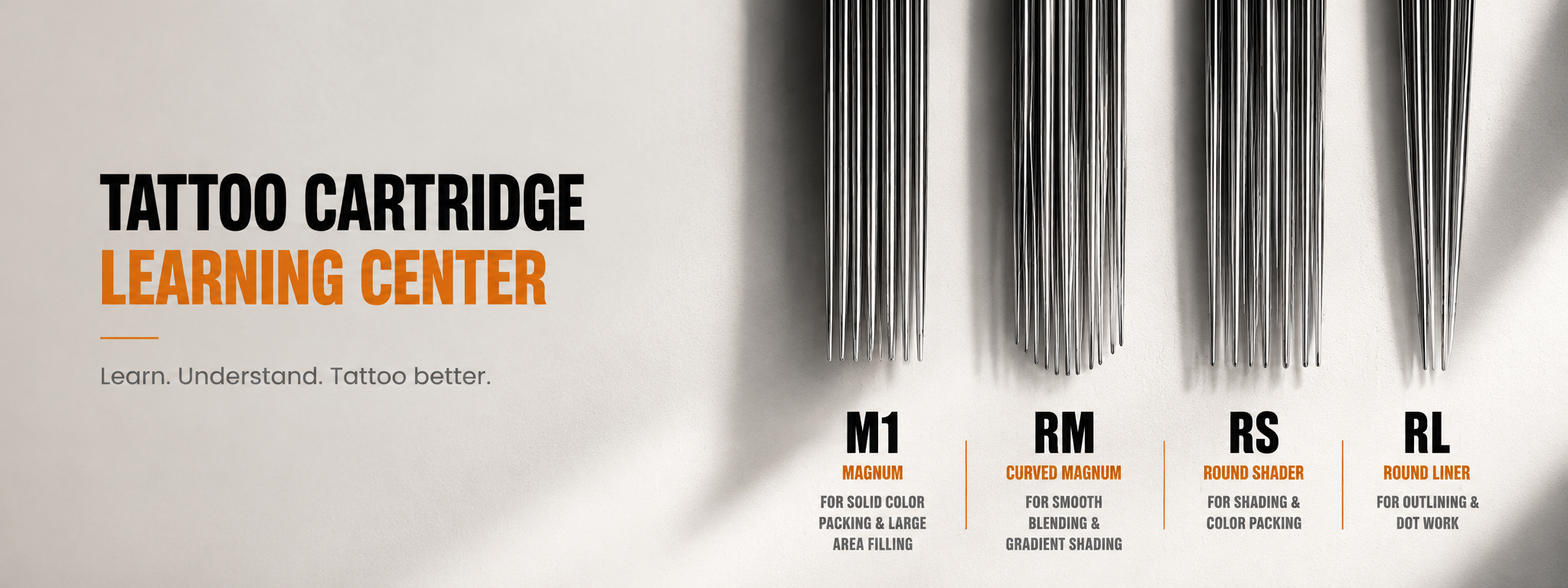
Wider groupings — more space between tips, which changes the capillary characteristics. Ink is held differently and released differently. Round shaders have wider spacing than round liners by design — this produces the softer deposit character that shading requires.
Grouping stability — a grouping that holds its formation under session pressure maintains consistent capillary characteristics throughout the session. A grouping that spreads under pressure changes its capillary geometry, which changes ink flow behaviour progressively.
The Tip Geometry
The internal geometry of the tip affects how smoothly the needle moves through the ink reservoir on each stroke cycle. A tip with well-calibrated internal dimensions creates consistent resistance — enough to hold ink by surface tension between strokes, not so much that it disrupts the capillary loading on the upstroke or impedes ink release on the downstroke.
Tip geometry also affects how quickly ink replenishes on the needle tips after a stroke. A tip that channels ink efficiently back to the needle grouping between strokes maintains more consistent loading — which means more consistent deposit, particularly during rapid working speeds.
Ink Viscosity
Ink viscosity — how thick or thin the ink is — directly affects how it behaves in the capillary system. Thicker inks have higher surface tension, which can hold them on the needle tips effectively but can also make them harder to release consistently on each stroke. Thinner inks flow more freely but have lower surface tension, which means they load and release differently.
Dense black and opaque pigments — typically higher viscosity. Hold well on needle tips but require sufficient membrane pressure regulation to flow consistently. In heavily diluted black (grey wash), viscosity drops significantly — the capillary behaviour changes, and cartridges with higher ink retention handle the lower surface tension better.
Watercolour-style and heavily diluted inks — low viscosity. Flow easily but with less surface tension holding them on the tips between strokes. Ink retention becomes a more critical cartridge spec for these applications.
Traditional opaque pigments — often high viscosity with dense pigment loads. Require consistent membrane pressure and efficient tip geometry to flow without surging.
Ink Flow Characteristics — What Each Feels Like
Professional artists develop a feel for ink flow over time — but articulating what different flow states feel like helps identify problems earlier.
Consistent Flow
The baseline you're aiming for. Every stroke deposits approximately the same amount of ink at approximately the same depth. Lines build with consistent weight. Shading builds with predictable tonal density. You can focus on technique and placement rather than compensating for equipment variation.
Consistent flow feels like the cartridge is invisible — it's doing exactly what you expect it to do, every stroke.
Heavy Flow
More ink per stroke than intended. Can result from voltage set too high, ink viscosity lower than expected, or a membrane that's regulating pressure with lower resistance than calibrated. Heavy flow produces lines that are wider than the needle size suggests, shading that saturates faster than expected, and color that goes in quickly but can over-saturate if not managed.
In some applications — bold traditional color packing, heavy outlines — heavy flow is desirable. In fine line and realism, it's a problem that requires voltage adjustment or cartridge change.
Light Flow
Less ink per stroke than intended. Can result from voltage too low, ink viscosity higher than expected, a dry needle (insufficient re-dipping), or a membrane that's creating too much resistance. Light flow produces lines that are thinner or more inconsistent than expected, shading that builds slowly, and color that requires excessive passes for saturation.
In fine line and ultra-light realism shading, intentionally light flow is a technique tool — controlled through voltage and working speed. When it's unintentional, it's a troubleshooting signal.
Surging Flow
Inconsistent flow that delivers more ink on some strokes and less on others — a surging, uneven deposit. Usually a membrane issue — either inconsistent tension regulation or the beginning of membrane fatigue. Can also result from ink that has partially dried on the needle tips, creating irregular surface tension.
Surging shows up as uneven line weight, patchy shading, and color with inconsistent saturation. It's one of the clearest signals that the membrane is the problem.
Stalling Flow
Strokes where the needle moves but minimal or no ink deposits. The capillary loading has failed — the needle tips are dry. Causes include insufficient re-dipping, ink that's too thick to load efficiently by capillary action, a tip geometry issue, or membrane failure that's disrupting the upstroke vacuum that maintains capillary loading.
Stalling is distinguishable from light flow by its intermittent character — some strokes deposit normally, others deposit nothing.
How Ink Flow Affects Different Techniques
Linework
Linework is most sensitive to flow consistency. Line weight is directly determined by how much ink deposits per stroke — inconsistent flow produces lines with variable weight, which is visible immediately in the finished work.
For linework, consistent moderate flow is the target. Heavy flow produces lines wider than intended. Light flow produces thin, inconsistent lines. Surging produces lines with irregular weight variation.
The needle grouping's capillary characteristics matter significantly for linework — tight round liner groupings hold and release ink more predictably than wider groupings, which is why round liners produce cleaner lines than round shaders at the same size.
Shading and Gradients
Shading requires controlled, buildable flow — the ability to deposit small, consistent amounts of ink per pass and build tonal depth gradually. For gradient work, the ability to reduce flow progressively as you move from dark to light requires both machine voltage control and membrane responsiveness.
Heavy flow in shading saturates the skin too quickly for gradient building — you lose the tonal range before you've established it. Light, controlled flow that builds gradually is what produces smooth gradients. This is why high-elastic membranes — which respond more precisely to subtle voltage reductions — are particularly valuable for realism and portrait shading.
Color Packing
Color packing benefits from heavier, more assertive flow. The goal is maximum pigment per pass across a large area — efficiency of saturation. Thicker inks, larger needle groupings, and membranes calibrated for solid color work all contribute to the efficient, high-volume flow that color packing requires.
The surging and stalling problems become most apparent in color packing with high-viscosity traditional pigments. A cartridge with an enhanced ink flow system — specifically designed to handle variable viscosity — maintains more consistent flow through dense pigment loads than a standard cartridge.
Dotwork
Dotwork requires precise, repeatable flow on individual marks. Each dot should receive the same ink deposit — the same size, the same depth, the same density. This requires both consistent membrane pressure regulation (same flow on every stroke) and good capillary retention (ink stays on the needle tips between the deliberate pauses of dotwork technique).
Ink retention is a particularly relevant spec for dotwork — cartridges that hold ink efficiently between marks produce more consistent dot density across thousands of repetitions in a dotwork shading field.
Reading Ink Flow During a Session
Developing the ability to read ink flow in real time — and respond to it before it affects the work — is a professional skill that develops with experience. Here are the signals to watch for:
Visual signals on the skin: Lines that are thicker or thinner than expected, shading that's building faster or slower than the voltage setting suggests, color that's going in unevenly. These are immediate flow feedback signals.
Feel in the machine: Changes in machine resistance or vibration can indicate membrane changes. A machine that suddenly feels different at the same voltage — more resistance, or less — may be responding to a membrane that's fatiguing or has failed.
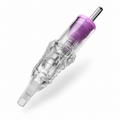
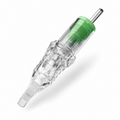
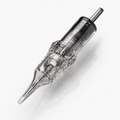
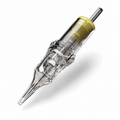
Ink on the needle tips: A transparent tip lets you see how ink is sitting on the needle grouping between strokes. If the tips look dry when they shouldn't, capillary loading has dropped — time to re-dip or check for flow issues.
Ink in the grip section: As covered in the membrane guide, any ink reaching the grip section means membrane failure. Replace immediately.
Optimising Ink Flow — Practical Steps
Match voltage to cartridge and ink: Every cartridge has an optimal voltage range for its membrane resistance and tip geometry. Too low and flow stalls or becomes light. Too high and flow becomes heavy and hard to control. Start at your standard working voltage and adjust based on flow feedback.
Match ink viscosity to technique: Thin inks for gradient and wash work. Standard viscosity for everyday linework and shading. Dense, undiluted pigment for color packing. Adjusting viscosity for the technique is faster than fighting the cartridge to compensate for a viscosity mismatch.
Re-dip before flow stalls: Don't wait for dry strokes to re-dip. Develop a re-dipping rhythm that matches your working speed and the cartridge's retention characteristics. Cartridges with excellent ink retention give you more strokes per dip — reducing interruption frequency.
Use transparent tips for flow monitoring: A cartridge with a transparent body lets you see ink behaviour in real time. If flow is starting to change character, you'll see it before it affects the skin.
Change cartridges proactively in long sessions: Don't wait for membrane fatigue to manifest in the work. Standard professional practice is to change cartridges every 1–2 hours in extended sessions — not just for hygiene but for membrane performance maintenance.
Summary
Ink flow is the expression of everything working correctly — or not — in a tattoo cartridge. It's controlled by membrane pressure regulation, needle grouping capillary characteristics, tip geometry, and ink viscosity, all operating simultaneously.
Consistent flow is the target for most professional applications. Heavy, light, surging, and stalling flow are diagnostic signals that point to specific causes — membrane, voltage, viscosity, or grouping issues.
Reading ink flow in real time and responding to it before it affects the work is a professional skill. The right cartridge — with a quality membrane, stable grouping, and well-engineered tip — makes consistent flow the default rather than something you have to manage around equipment limitations.
Continue Learning
- Cartridge Membrane Guide — Why It Matters for Ink Flow
- Tattoo Cartridge Needle Gauge Guide — 0.30mm vs 0.35mm Explained
Recommended for Artists