Cartridge Anatomy — Every Component Explained
Knowing what's inside a tattoo cartridge — and what each part actually does — changes how you read specs, evaluate brands, and troubleshoot performance issues. Most cartridge failures trace back to a specific component. Most performance differences between brands come down to material choices in one or two parts.
This page breaks down every component of a professional tattoo cartridge, what it does, how it affects performance, and what to look for when evaluating quality.
The Five Core Components
A tattoo cartridge is made up of five functional components. Every cartridge — regardless of brand, configuration, or price point — contains all five. The difference between a budget cartridge and a professional one comes down to the materials and manufacturing tolerances applied to each.
1. The Needle Bar
The needle bar is the internal shaft that the needle grouping is soldered to. It connects the needle tips at the front of the cartridge to the drive mechanism at the back — when the machine pushes the drive bar, the needle bar transmits that motion to the needle tips.
What affects quality:
- Steel grade — the needle bar should be made from medical-grade stainless steel. 316L stainless steel offers superior corrosion resistance due to its molybdenum content. 304 stainless steel is also surgical grade and widely used. Unspecified steel grade is a transparency gap that professional artists shouldn't accept.
- Straightness and alignment — a needle bar that isn't perfectly straight introduces lateral movement into the needle's path, which translates into inconsistent ink deposit and potentially uneven skin penetration.
- Weld integrity — the needle grouping is soldered to the bar. Poor soldering can cause grouping shifts during session use, which changes the mark the cartridge makes mid-session.
2. The Needle Grouping
The needle grouping is the arrangement of individual needle tips at the front of the cartridge. It determines the shape, size, and character of every mark the cartridge makes — it's the most visible performance variable and the one most directly tied to tattooing technique.
Grouping Configurations
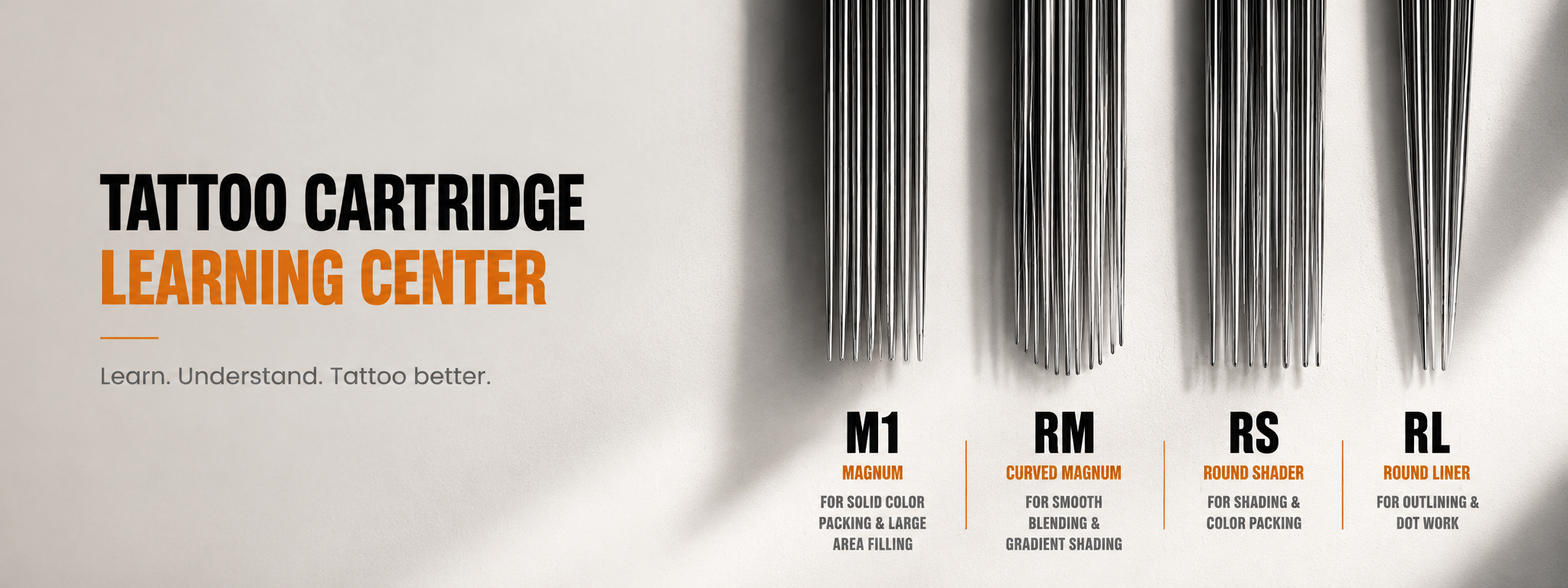
Round Liner (RL) — needles arranged in a tight circle. The tight grouping creates a single, precise point of ink deposit. Line weight is consistent and controlled. Used for outlines, fine line, and detail work.
Round Shader (RS) — needles arranged in a wider circle with more spacing between tips. The wider grouping deposits ink across a slightly larger area per stroke, producing softer edges. Used for shading, gradients, and tonal work.
Magnum (M / M1) — needles arranged in two parallel rows across a flat plane. More needle tips contact the skin per stroke, which means more ink per pass and faster coverage. Used for color packing and large area fill.
Curved Magnum (CM / RM) — the same two-row magnum arrangement but with a curved arc. The curve allows even contact across contoured skin surfaces. Used for blending, smooth color transitions, and shading on curved anatomy.
What Affects Grouping Quality
Grouping tightness — how closely the needles are packed together. Super-tight groupings maintain their formation under session pressure, producing consistent marks. Loose groupings can spread under pressure, widening marks progressively across a session.
Needle count — the number of needles in the grouping determines coverage and ink capacity. A 7RL has 7 needles in a round liner arrangement. A 15M has 15 needles in a flat magnum arrangement.
Soldering consistency — the needles are soldered together at the grouping. Consistent, clean soldering keeps the grouping stable. Poor soldering allows individual needles to shift, which creates uneven ink deposit.
3. The Tip
The tip is the front section of the cartridge — the part that contacts or sits just above the skin surface during tattooing. It guides the needle to the skin and is the last point of contact before ink meets skin.
Tip Materials
Medical-grade polycarbonate (PC) — the highest standard tip material. Polycarbonate is hard, chemically resistant, optically clear, and durable. Food-grade PC adds an additional purity standard relevant to skin contact. This is what premium cartridge lines use.
Medical-grade plastic (ABS or similar) — functional and meets hygiene standards, but less clear and slightly less durable than polycarbonate. Standard across mid-range cartridges.
Standard plastic — unspecified material. Functional at low session volumes. Less chemically resistant and less clear. Found in budget cartridges.
Tip Visibility
Fully transparent — the entire tip and body are clear. You can see needle position, ink flow, and any buildup in real time during the session. The highest visibility option.
Semi-transparent — partial visibility. You can see the needle position at the tip but not internal ink flow behaviour. Common in mid-range and premium cartridges.
Opaque — no visibility. You're working entirely by feel and result. Found in older designs and some budget cartridges.
Tip visibility is a practical working advantage, not just an aesthetic feature. For fine detail work, being able to see exactly where the needle is before it contacts the skin reduces positional errors. For extended sessions, being able to see ink flow behaviour helps you catch problems before they affect the work.
Tip Geometry
The internal diameter and shape of the tip affects how smoothly the needle moves through ink during each stroke. A well-engineered tip maintains consistent resistance — enough to hold ink by surface tension between strokes, not so much that it disrupts flow during the stroke. Tip geometry is rarely published as a spec but contributes significantly to the feel of a cartridge in use.
4. The Safety Membrane
The safety membrane is the silicone barrier inside the cartridge body, positioned behind the needle grouping. It's the most mechanically complex component and the one most responsible for session-long performance consistency.
What the Membrane Does
Backflow prevention — on every needle upstroke, the membrane prevents ink and blood from travelling back into the grip section. This is the hygiene function — the reason cartridges are safe to use with rotary machines without contaminating the internal mechanism.
Pressure equalisation — on every downstroke, the needle displacing volume inside the cartridge increases internal pressure. The membrane flexes to equalise that pressure, which maintains consistent ink delivery to the needle tips. On the upstroke, the membrane returns, creating a slight vacuum that maintains capillary loading.
Ink flow regulation — the membrane's tension and elasticity directly affect how consistently ink reaches the needle tips. A membrane with well-calibrated tension produces even, predictable flow. A membrane that loses tension mid-session produces variable flow.
Membrane Types
Standard silicone — functional backflow prevention and basic pressure equalisation. Performance is adequate under normal session conditions. Tension can degrade over extended sessions.
High-quality silicone — engineered for consistent tension across extended use. Better pressure equalisation, more reliable backflow prevention, and more consistent ink flow across a full session. The standard in professional-grade cartridges.
High-elastic silicone — a more flexible compound that responds more precisely to subtle pressure changes. Particularly relevant for techniques requiring fine tonal control — realism, portrait shading, grey wash — where membrane sensitivity at low voltage matters.
Patented membrane systems — some brands (notably Cheyenne) hold patents on specific membrane designs. Patented doesn't automatically mean better, but it does indicate a specific engineering investment in membrane performance.
What Membrane Failure Looks Like
- Ink leaking back into the grip during use
- Inconsistent feel between strokes at the same voltage
- Ink flow that changes character progressively across a session
- Visible ink contamination in the grip after use
Any of these is a signal to replace the cartridge immediately and evaluate whether the brand's membrane quality meets your professional standards.
5. The Cartridge Body
The body is the outer housing that contains all other components and connects the cartridge to the machine grip. It's the structural element that holds everything in alignment and determines how securely the cartridge seats.
Body Materials
Medical-grade polycarbonate — durable, optically clear, chemically resistant. The highest standard cartridge body material. Allows full visibility when combined with a transparent design.
Medical-grade ABS plastic — functional, meets hygiene standards, less optically clear than PC. Standard across professional cartridges.
Standard plastic — unspecified material. Functional but less durable and less chemically resistant.
Body Design Features
Transparent body — allows full visibility of ink flow and needle behaviour during the session. A significant working advantage for precision techniques.
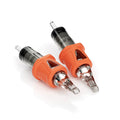
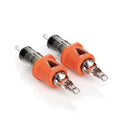
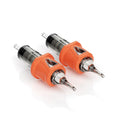
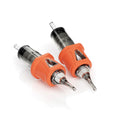
Anti-roll design — some cartridge bodies include a flat edge or grip feature that prevents the cartridge from rolling on the work surface between uses. The BigWasp Energy line includes an anti-roll design that also reduces lateral vibration during the session — a performance feature, not just a convenience one.
Finger rest — some designs include an ergonomic grip feature on the body itself. The BigWasp Energy line's orange finger rest cushion provides a consistent tactile reference point for grip positioning across a long session.
Connection collar — the rear section of the body that seats into the machine grip. The diameter and depth of the collar determines compatibility with different grip systems. Standard-format collars fit most professional grips.
How Components Interact
Cartridge performance is not the sum of individual component quality — it's the result of how those components work together. A high-quality needle grouping in a body with an inconsistent membrane produces inconsistent results. A well-engineered membrane in a body with poor tip geometry produces flow problems.
When evaluating a cartridge brand, look at the full component picture:
- Is the steel grade published?
- What is the tip material and visibility?
- What membrane type and compound is specified?
- What is the body material?
- Are manufacturing tolerances consistent across boxes?
Brands that publish full component specs are giving you the information to make an informed decision. Brands that don't are asking you to trust unknown materials in a professional context.
Component Quality Reference
| Component | Budget | Mid-Range | Professional |
|---|---|---|---|
| Needle steel | Unspecified | 304 stainless | 316L stainless |
| Tip material | Standard plastic | Medical ABS | Medical PC |
| Tip visibility | Opaque | Semi-transparent | Fully transparent |
| Membrane | Standard silicone | Quality silicone | High-elastic silicone |
| Body material | Standard plastic | Medical ABS | Medical PC |
| Sterilization | Box-level EO | Individual EO | Individual EO + dialysis paper |
Summary
Every component in a tattoo cartridge affects performance in specific, measurable ways. The needle bar steel grade determines durability and consistency. The grouping determines what mark is made. The tip material and geometry affect visibility and flow. The membrane determines session-long consistency and hygiene safety. The body material affects durability and visibility.
Understanding these components is what allows you to read a cartridge spec sheet intelligently — and to know when a brand is being transparent about what you're putting into your client's skin.
Continue Learning
Recommended for Artists